Tuesday, October 6, 2026

Why Senior Benefits Are A Smart Growth Play For Brokers In 2025

The employee benefits market isn’t what it used to be, and that’s good news for forward-thinking brokers.

As demographics shift and the Medicare-eligible population explodes, more employers are looking for ways to support older workers and retirees. At the same time, brokers who once stayed narrowly focused on group health are beginning to see the senior market not as a separate vertical, but as a natural extension of the value they already provide.

The message in 2025 is clear: Senior benefits aren’t niche anymore. They’re strategic.

The Demographic Surge Brokers Can’t Ignore

By 2030, every Baby Boomer will be age 65 or older. In fact, more than 11,000 Americans are turning 65 every day.1 And many aren’t retiring at 65 either. People are working longer, and they’re expecting benefits that reflect their needs.

Medicare Advantage enrollment continues to rise, with over half of all Medicare-eligible beneficiaries now enrolled in MA plans. As plan design, supplemental benefits, and carrier competition heat up, brokers who understand this space can offer real value, especially when clients are navigating post-65 transitions or retiree carve-outs.

This isn’t just about seniors. It’s about families, too. Many employees are caregivers for aging parents. Being able to speak to Medicare, supplemental plans, and long-term care options strengthens your client relationship beyond open enrollment.

Why the Senior Market Makes Strategic Sense

For brokers who have built careers around employer-sponsored coverage, expanding into senior benefits offers more than just a new revenue stream. It creates continuity.

Here’s what it unlocks:

  • Retiree solutions for employers looking to offload post-65 benefits while still supporting valued former employees.
  • Medicare navigation for older employees transitioning off the group plan, especially important as more employers seek a clean break at age 65.
  • Caregiver support tools that resonate with HR teams aiming to help employees manage aging family members’ coverage.
  • Competitive differentiation in an industry where value-added services win renewals and referrals.

In short, senior benefits give brokers a way to stay in the conversation as employee needs evolve.

The Mistake Most Brokers Make? Waiting

Too many brokers view the senior market as “later”. Something they’ll get around to when their book starts to age out.

But by then, the opportunity has passed. The broker who helped your client’s employee transition to Medicare? That’s the broker they’ll refer to friends and family. That’s the broker your client will remember when it’s time to design a retiree strategy.

The opportunity is now, and it’s growing.

What 2025 Clients Are Asking For

Employers today are balancing five generations in the workforce. The playbook that worked five years ago no longer cuts it.

What employers want now:

  • Clear guidance on retiree benefits—especially how to phase out costly group coverage without leaving former employees stranded.
  • Help managing aging workforce transitions, including how to integrate Medicare education and offboarding.
  • Holistic support for caregivers, many of whom are in HR’s blind spot.
  • Partnerships that extend beyond renewal season.

This is where brokers with senior benefits expertise stand out. You’re not just reacting to rate hikes. You’re helping clients build long-term strategies.

How to Get Started (Without Getting Overwhelmed)

You don’t need to become a Medicare expert overnight. You just need the right partners.

Many general agencies, like BenefitMall, offer dedicated support for brokers entering the senior space. From quoting platforms to compliance insights to marketing tools, you can get up to speed without starting from scratch.

Keep in mind: selling Medicare plans requires proper certification and annual compliance training, but with the right support, it’s easier to get started than you might think.

Key areas to focus on:

  • Medicare Advantage and Medicare Supplement basics
  • Prescription drug plan options
  • Special Enrollment Period (SEP) timing and rules
  • What to say (and not say) when discussing Medicare with clients

The best brokers don’t try to do it all themselves but build networks that make them smarter, faster, and more credible.

Bottom Line: Be the Broker Who’s Ready

The senior market isn’t a trend. It’s a demographic reality, and a growth channel brokers can’t afford to ignore.

By integrating senior benefits into your offering now, you:

  • Future-proof your book of business
  • Deepen client trust and loyalty
  • Open new referral paths and revenue streams
  • Differentiate yourself in a crowded market

At BenefitMall, we work with brokers across the country to build smart, sustainable senior strategies that meet the moment. Whether you’re starting fresh or looking to expand your offering, we’re here to support the pivot with the certification, tools, and support you need.

In 2025, it’s not about selling Medicare plans. It’s about being the advisor your clients need at every life stage, for every workforce challenge. Reach out to our team today to learn more. 

Note:

  1. United States Census Bureau (2023)  U.S. Older Population Grew From 2010 to 2020 at Fastest Rate Since 1880 to 1890. https://www.census.gov/library/stories/2023/05/2020-census-united-states-older-population-grew.html.

Liver Function Testing: How Significant Of A Problem?

Insurance blood testing inevitably contains liver function testing, and just as inevitably will reveal abnormalities out of the normal range. In fact one in five or six sets of tests may show values above normal. Sometimes the results are abnormal enough to spur further testing and reveal significant health problems. Other times they have little if any mortality significance or may already be accounted for in an insured’s list of health conditions. Identifying which conditions have at most mild consequences in evaluating mortality help insurers separate uninsurable or highly rated risks from those which can be often taken as applied for.

Liver chemistry tests include alanine transaminase (ALT) and aspartate transaminase (AST). They may also be known as SGOT and SGPT respectively. Not every lab references the same normal range for these tests—some use 30 U/L, other use 45 U/L. It’s important to look at the reference ranges provided for each test to see what values fall into each’s lab normal range. The American College of Gastroenterology segregates rise in LFTs (liver function tests) as mild, moderate and severe. Less than two times the normal range classifies as mild, while 10-15 times normal is severe. Mild increases can be associated with severe disease, so putting a picture together of overall health is essential. But mild increases can also be classified as standard medical risks, and those are the ones that are most insurable.

The most common cause of mildly elevated liver function testing is metabolic dysfunction, sometimes known as fatty liver disease. These are most typically represented by mild (or normal) AST levels and elevated ALT levels. Overweight individuals, those with Type 2 diabetes and those with metabolic syndrome most fit this profile. Physicians rarely work these cases up in clinical practice unless the values are significantly abnormal, and ultrasound and the use of fibrosis scores are the most common further testing that is used. Those whose build or diabetes control is already factored into a mortality assessment don’t need additional ratings for these testing elevations. Loss of weight, better diabetes control, exercise and medication are the usual treatments, and good risk factor control more often than not mitigates any risk represented by small LFT elevation.

An opposite pattern occurs in a condition that represents more serious overall mortality—alcohol induced liver disease. Alcohol excess isn’t often admitted by a client, and even an APS may underestimate the problem when the doctor relies on the patient’s self-reporting of alcohol use. In these situations, the opposite ratio is exposed—AST is higher than ALT, usually in a ratio of 2:1 or more. Other associated lab testing increases the suspicion of alcohol over-use—A GGTP is often elevated, HDL is higher than would be expected and certain parameters on a CBC may be suspicious. Insurers now routinely get CDT (carbohydrate deficient transferrin) as reflex testing when LFTs are elevated or fit this pattern, and this test has been shown to be quite specific for alcohol abuse. It’s a difficult situation when an agent or broker tries to broach alcohol as a cause for rating or decline with a client in denial, but the testing usually speaks for itself. Cessation of alcohol usually returns all testing to normal unless the abuse has been chronic over years and is causing liver injury.

Chronic hepatitis (both B and C) are notable causes for liver function abnormalities, hepatitis C now overtaking hepatitis B in frequency in part because of the hepatitis B vaccine now required of school age children. Often considered uninsurable years ago (especially hepatitis C), antiviral treatment has helped to arrest the virus and liver function is preserved in many under treatment. Insurers may screen for hepatitis B and C as a reflex test when certain parameters are met, but in those under treatment whose current viral loads are absent and under treatment mild LFT abnormalities may persist. These are accounted for and a good percentage are insurable at standard or close to standard rates.

There are many other causes for mild liver function abnormalities, including thyroid disease, Wilson’s disease, autoimmune hepatitis and other viral infections. Two others are worth discussion: Hemochromatosis and drug induced liver abnormalities. Hereditary hemochromatosis is a condition where there is hepcidin deficiency, resulting in iron overload in the liver. Further testing illustrates the condition, and treatment by phlebotomy keeps the condition in check. Drug induced liver function abnormalities is also a restively common cause of an increase in LFTs. This is not so much drugs of abuse but often commonly ones used for other medical conditions, such as atorvastatin (Lipitor) or other statin drugs used to lower cholesterol. Stains are metabolized in the liver and the ALT elevations are thought to be the result of a toxic intermediate of drug metabolism. Stopping the medication reverses the test abnormality, but many doctors will choose to continue the statin if the LFT elevations are mild, and the medication has a beneficial effect on cholesterol as a risk factor. These elevations are minor and generally don’t figure into any kind of rating once the cause is identified.

Elevations in liver function testing are in a large majority of applicants unknown to anyone (even their primary care physician) and asymptomatic, resulting in an unwelcome surprise in risk evaluations. Mild elevations with a known cause however are very often no cause for alarm and can result in standard or as applied for insurance applications.

Heartfelt Thanks

Twas the week before Christmas and all through the house,
Not a creature was stirring, not even a mouse,
I was warm and snug tucked inside my bed,
When my brain clicked on, filling my head,
With these thoughts that I wish to espouse.

For the past eight years, Broker World magazine has kindly been an outlet for many of my professional articles. Over the years I have received many generous and insightful remarks from readers that have served to validate my efforts and to genuinely make me feel that the efforts were appreciated.

In that vein, I want to in turn thank all the BWM readers who have recently taken the time to e-mail, text, or even telephone me with kind words about the poignant nature of my last article, offering shared health experiences, and even some medical advice!

For those who may not recall, or may have missed it, in my last article, entitled The Healthiest Guy In The Hospital, I recounted the events surrounding my very surprising and near-fatal “widow-maker” heart attack of September 10, and the challenging aftermath of the ensuing weeks.

As an update, I am pleased to report that the thrice-weekly Cardiac Rehab is going well, and that my wife and I are both adjusting to my full retirement (October 30th) from the long term care insurance industry.

What I did not realize at the time that I penned the article is that, in addition to the obvious challenges attached to the physical recovery after such a traumatic event, the tremendous psychological aspect takes on a life of its own.

To this end, on Black Friday, I acquiesced to encouragement from my family and bought a new Apple watch. Not because I wanted to check email or answer my phone and texts, but because of the cardiac features. My watch measures how many beats per minute my heart is pumping, and when I get errant chest pain, I can even give myself a one lead EKG to eliminate any fear of atrial fibrillation. Yikes.

A few newfound truths:

Forget about FOMO–fear of missing out–the new Fear–FOODI–centers around simply “fear of over doing it” because when I do, there is a price to be paid. Superman has left the building.

Sleep has taken on greater priority, and the chronic fatigue is still in evidence three months after the event. The rare pre-event 10–15-minute power nap has yielded on most days to a more proper 45–90-minute siesta or I am a narcoleptic zombie by dinner time.

My pre-event perfect blood pressure is now incredibly low, which means that I am now perpetually cold and wearing heavy sweatshirts or sweaters around the house. This also accounts for the fatigue as well.

Because of the blood thinners, I bruise as easily as a peach and am usually sporting unexplained bruises all over my body. I contemplated asking Santa for a bubble wrap body suit.

Reading labels for sodium and saturated fat content at the grocery store is a real drag and downer.

Despite these newfound truths, they all beat the alternative and every day truly is a gift…that is why it is called the Present.

During this season of gratitude and giving thanks, I want to express my thanks to my good friends and partners at Krause Financial for their wise encouragement of my medical retirement and focus on my recovery and quality time with my family. I again express gratitude for the medical skills that saved my life, for the exceptional caregiving [and hovering] of my family, and for all of you who have expressed good wishes. Best wishes for a prosperous and healthy 2025!

What Is A Custodial Account And Should You Use One?

The greatest wealth transfer in history is already well under way. The research firm, Cerulli and Associates, estimates that $84 trillion will be passed on from the Baby Boomer and Silent Generation between now and 2045. The majority of these assets are expected to go directly from parent to child, with the most coming from Baby Boomers and going to millennials. However, Generation Alpha (those born between 2010-2025), are already on the receiving end from both their parents and grandparents.

Estate planning and gifting strategies all fit neatly within the current wealth transfer narrative. Today’s seniors have far more wealth than their parents or grandparents did in their later years. Conversely, rising generations are expected to have a harder financial start. Whether it is joining the student loan epidemic with a bachelor’s degree that routinely exceeds six figures, paying for a wedding that costs on average $33,000 in 2024, or trying to become a first-time homebuyer.

As parents and grandparents welcome a new baby into their family, the impulse to help financially has never been stronger. The financial industry is meeting this trend with a barrage of vehicles from 529 college savings plans, savings bonds, CDs, juvenile life insurance policies, trust accounts, and more. Many of these products blend together in an overall gifting plan for young beneficiaries and are beyond the scope of this article. But one account often mistakenly confused as the catch-all for kids that warrants clarification is a custodial account.

What is a custodial account? A custodial account is a financial account that allows a person to transfer assets to a minor beneficiary. The custodian, typically a parent or guardian, manages the property on behalf of the underage beneficiary. In this respect, it is similar to a trust, but without any of the trust paperwork and attorneys.

There are two different types of custodial accounts: The Uniform Gifts to Minors Act (UGMA) and Uniform Transfers to Minors Act (UTMA). UTMA accounts are more common as they can hold nearly any type of asset including real estate, and most states no longer use UTMA accounts. The UTMA account can hold cash, art, personal property, stocks, bonds, mutual funds, and more.

There are no contribution limits to a custodial account. Many people hear about the annual gift tax exclusion, currently $18,000 per person per recipient in 2024 or $36,000 for a married couple gifting to one child, and mistake this as a limit. All this means is that any gift exceeding $18,000 can require the filing of a federal gift tax return. This is often not as bad as it sounds either. The 2024 lifetime estate tax exemption is $13.61 million, and it is portable, meaning a married couple can protect up to $27.22 million from estate tax. When someone makes a gift to one person over $18,000, the overage is deducted from their lifetime estate tax exemption.

Should every parent or relative looking to gift use a custodial account? Perhaps the most important consideration about custodial accounts is that any transfer into the account is irrevocable and the transferor cannot access the asset. If the transferring parent/guardian or grandparent runs into financial trouble, changes their mind about their estate planning goals, no longer wants to leave money to the child for whatever reason, they are stuck as what is done is done. A custodial account is controlled by the custodian and terminates when the minor beneficiary reaches the age of majority (typically age 18 or 21). An important concern is if the custodial account assets are significant, and the 18 or 21-year-old beneficiary is not financially mature when he or she takes full possession of the assets.

So, what are the tax benefits, or lack thereof, of a custodial account? One of the advantages is that in 2024 up to $1,300 of any earnings (interest, dividends, or capital gains) may be exempt from federal income tax, earnings over $1,300 but less than $2,600 would be taxed at the child’s rate which is often lower than the custodian’s, and anything over $2,600 would be taxed at the parent’s rate. This is known as the “kiddie tax.” If the child has income that exceeds certain thresholds, the parent may need to file a separate income tax return for the child. From an estate tax planning standpoint, custodians must realize that transferring assets into the child’s account does not remove the assets from the transferor’s estate when the transferor is the custodian. Lastly, it is worth noting that custodial accounts are considered an asset of the child and may affect their eligibility for financial aid.

Like many financial vehicles, the goals and benefits may be in opposition with one another. For instance, a parent wants control but also tax benefits, they want to help the child but with flexibility for an uncertain future. The reality is that they may satisfy one goal while giving up another. This necessitates coordination with financial professionals for an overall financial and estate plan unique to each client.

What To Do At LTC Claim Time? Stop.

They are your clients, and they will have questions. Naturally, your inclination is to help—even if they didn’t purchase the long-term care policy from you. Instead, first stop. Stop, to avoid overcommitting. To be clear, the point of stopping is not for clients to delay submitting their claim. The point is to be thoughtful and prudent before acting. Has your client even reviewed the policy before calling in the claim? Will you be assisting them? The goal is to produce a good experience for them and to avoid the hassle and stress associated with a delayed or denied claim.

If the insured or family member reaches out telling you they think it’s time to go on claim, listen. Listen and empathize as they describe their challenges and the strain on their family. Then, take a moment to praise the decision to purchase the policy to begin with. They already have a great head start compared to most Americans. Even so, it’s important to convey the process they are about to embark on.

Understanding Eligibility
A long-term care insurance (LTCi) policy is catastrophic coverage, comparable to homeowner’s insurance. The homeowner’s policy kicks in when the house is destroyed by a fire or tornado. But it won’t pay for home maintenance and repairs.

Similarly, LTCi is not designed to help with all the afflictions of growing old. Generally, insureds need support before they can satisfy the criteria to receive LTCi benefits from their policy. They will likely need help with Instrumental Activities of Daily Living (IADLs) like food preparation, grocery shopping, housekeeping, managing medications, managing finances, paying bills, yard work, or transportation.

When they think they are eligible to be on claim, a licensed health care practitioner (doctor, nurse, social worker) will assess whether they satisfy the eligibility criteria (i.e. triggers). Generally, this is (1) having a severe cognitive impairment or (2) needing help, from another person, with at least 2 out of 6 activities of daily living (ADLs) like bathing, dressing, toileting, transferring (in and out of bed or chair), eating, and continence. Once the criteria have been met, the LTCi policy can cover IADLs as well.

Note: Most policies consider ADLs to include standby assistance as well as hands-on assistance. Also, older LTCi policies issued before 1993, may have language requiring hospitalization or nursing home stay before benefit eligibility.

Common Reasons for LTC Claims Denials:

  • Insufficient evidence or documentation to satisfy eligibility
  • Insufficient documentation for the Plan of Care
  • Unapproved or unlicensed care provider
  • Services not covered
  • Elimination period not met
  • Policy lapsed
  • Conflicting medical opinions
  • Excluded conditions (like substance abuse or self-inflicted injuries)

Manage Expectations–The Process
Claims can take eight-plus weeks to get approved when assisted by third parties like: Amada Senior Care, Jahnke Consulting, or Thalheimer Insurance. For unassisted claims it could be eight to 12 weeks or longer. Consequently, with a waiting period like 90 days, the family can expect to pay out of pocket for care for five to six -plus months prior to receiving a payment from the insurer.

Note: Sometimes families hold invoices until the claim decision is finalized. But they should submit them right away so they can be paid when the claim is approved. In fact, one can contact the insurer even before they receive an invoice—like to obtain provider approval. (Typically, the elimination or waiting period begins from the first date of qualified care service.

Setting proper expectations can avoid turmoil and stress. Insurers need adequate documentation supporting the insured’s eligibility and plan of care. Unfortunately, the psychology of getting old is that insureds are likely to overstate their abilities at doctors’ appointments. They may conceal their declining physical or mental condition due to embarrassment and/or fear of losing their independence.

For example, during an assessment, one claimant denied problems with continence while he was literally wearing Depends. Insureds are inclined to talk about their best days but perhaps they should describe their worst too. Consider “sundowning” with dementia (confusion, agitation, pacing, aggression) which gets worse late in the afternoon or evening. Knowing this, should one schedule the cognitive assessment in the morning when they are at their best?

Unfortunately, sometimes doctors’ notes are written optimistically to protect patients’ feelings—thereby complicating benefit eligibility. Doctors today generally do not supply the same amount of detail they did years ago. They may click a digital option from a selection describing the patient’s condition vs. a personalized written narrative.

The family should review the insured’s medical records and encourage doctors to be forthcoming, detailed, and prompt. Additionally, consider that billing specialists are motivated to submit paperwork, so doctors get paid—whereas LTC claims requests may be a lower priority.

The insured/families are responsible for assembling records from physicians and caregivers and submitting them to the insurer. Insurers have very specific criteria (fax, mail, portal, email) which seniors may find challenging.

Important: while insureds are known to overstate their abilities—sometimes they or their families exaggerate or misrepresent their condition. This confuses and delays benefit eligibility. Therefore, be up-front and honest—since insurers may elect to engage an investigator for questionable claims.

Manage Expectations—Your Engagement
Your clients should read their LTCi policy. Afterwards, they should read it again. Reviewing the contract, obtaining medical and care provider records along with communicating with the insurer is an arduous task. Although well-intentioned, you likely won’t have the time or expertise to do this. So, don’t get in over your head and commit to assisting when you are unable to. However, you can arm clients with basic knowledge to help them manage the claim or refer them to a LTC claims consultant who will charge a fee for their professional services.

Let them know up-front if you will be engaged or not. The very last thing you want to do is antagonize them. Appropriately managing expectations can leave a good impression on your clients and their family.

Client Considerations

  • Do Not let the policy lapse.
    • Urge families to sign up for third party notification to prevent lapses.
    • If the policy has lapsed due to cognitive impairment or functional incapacity, quickly explore if the policy can be reinstated.
  • Review coverage parameters. Get a copy of the policy if necessary.
  • Did the client make a change to reduce their benefits such as during a rate increase or otherwise?
  • Encourage families to select one point person to interact with the insurer.
  • Consider setting up Power of Attorney (POA). Obtain necessary paperwork like HIPAA release forms to allow the insurer to communicate with physicians and caregivers.
  • Ask about the insurer’s claims process. Find out how providers are assessed and get suggestions about care coordinators. Ask about discounts for LTC services.
  • Ensure the trusted family member/POA is present each time the insured interacts with the insurer.
    • Seniors on their own may get confused and not disclose sensitive care needs which harms their eligibility for benefits.
  • Be prepared to supply the following (a) a copy of the license for the home health care provider or facility (b) the health care practitioners Plan of Care (c) the care provider’s daily caregiving notes (d) invoices for care services and (e) a list of the physicians and medications.

Policy Provisions to Review

  • What criteria trigger benefit eligibility?
  • How long is the Waiting/Elimination Period? How exactly is it counted?
  • What is the Maximum Daily/Monthly Benefit?
  • Will the maximum benefit increase annually?
  • What Is the Lifetime Maximum Benefit Amount?
  • What types of care services are covered and how are they defined?
  • Does the Benefit Amount, Elimination Period, or Benefit Period vary for Home Health Care v. Assisted Living Facility v. Nursing Home?
  • Is the policy Reimbursement (most common) or Indemnity?
  • Is there Joint coverage?
  • What riders are included in the policy?
  • Is there Waiver of Premium and when does it begin?
  • What exclusions apply?

If you want to learn more about LTC definitions you can refer to CLTC: A_Guide_For_Your_LTC_Insurance_Policy.pdf (certitrek.com)

Good News—Silver Lining
While LTCi often gets a bad rap as having an onerous claims process, we should recognize insurers have the responsibility to avoid paying ineligible claims. They need adequate documentation to justify payment. The more prepared your clients are, the more pleasant their claims experience will be.

It’s human nature when we receive good service, like 10 times in a row, that we simply carry on silently. But if on the 11th visit, we have a bad experience, then it’s the one time we talk about. Now imagine if you have a negative experience with a claim while under the pain and duress of a loved one’s decline. It is magnified—unbelievably so.

We’ve all heard of heart-breaking LTC claims examples. But, in 2023 alone, $14+ billion of traditional LTCi claims were paid. We don’t hear enough about these heart-warming testimonials where they were rescued by their policy. Not just the insured, but their spouses and children too—who now can spend more quality time with them vs. caregiving. Perhaps it’s our own fault, as an industry. We fail to toot our own horn, particularly in November, during Long-Term Care Awareness Month.

In the U.S., there are over 10,000 people turning 65 every day. It’s been dubbed the silver tsunami. So, get ready. More and more of your clients will be contacting you about their LTCi policy. Be prepared to push the brakes and stop. Congratulate them on their purchase. Help manage expectations. Arm them with the knowledge that it will likely be a lengthy process—but to hang on and be patient. Then outline your ability to assist (or not), provide pointers to review their policy, or refer them to a third party.

The good news is, claim time is the time when the insurer delivers on their promise and it’s the time for you to serve the next generation, potentially your future clients.

The Healthiest Guy In The Hospital

0

The doctors and nurses all called it the widow maker. Some may call it dark [humor] but the heart attack that I suffered three weeks ago tomorrow was a whopper. While riding to the first of two hospitals with four paramedics in attendance, it was the beginning of a very surreal experience. I have since been banned from using this word because I freely admit to having used it ad nauseum and probably have worn it out. What I would like to ban are the phrases, “you are the healthiest guy in the hospital” and “we cannot tell you why you had the heart attack that you did.”

The heart attack woke me at 0400. For a moment or two I debated on what to do. It was neither excruciating pain nor as if an elephant was sitting on my chest. Rather, it felt like I had been hit on my sternum with a line-drive baseball. When the pain started down my left arm, it was easy to recognize that something bad was happening. I finally woke my wife, whom I have looked to as the quintessential Dr. Mom for over forty-two years now. I calmly said, “I think I am having a heart attack.” No exclamation mark, no drama. She immediately jumped out of bed, popped four baby aspirins in my mouth, and called 911. Calling 911 also triggers all the alarms at the hospital so that they are prepared to treat you when you arrive, especially if it is at an odd hour as mine occurred. P.S. Never drive yourself or have someone drive you to the hospital, never wait to see if whatever you are experiencing “passes,” do not pass Go, because you will probably die before you collect your $200. Another lesson we learned is that with a heart attack of any magnitude, “time is muscle.”

The first ambulance managed to find every pothole in the local roads, and as a result only one of three IV ports managed to be placed in my arms. At the first hospital emergency room they got the lines in, shot me up with a bunch of drugs, deemed me stable, and then determined that it would be faster and better for me to be transferred to the hospital downtown where the Cath Team was already at work on some other poor heart attack victim rather than to wait for them to come to me.

In the Cath Lab I was not under an aesthetic for the procedure because they do not want to intubate. As a result, I remember laying there on the table, asking occasionally how it was going or what time it was, only to be told, “don’t move” and hearing, “give him some more juice,” which served to keep me in a “twilight” state but breathing on my own.

All told, I have written and published approximately seventy articles over the past seven years. What started out as a quarterly goal soon became a monthly one. I assumed that this practice would continue for many years to come. Reality Check: I am writing this article not quite three weeks after having experienced said widow maker, at 0430 in the morning, because I have spent the previous two hours laying sleeplessly in bed, composing and editing this opus. Second Reality Check: This may very well be my swan song. I do not know what the future will bring. I have garnered an appreciation that the past is gone, and the future a bright question mark, and that it really is all about Today, and that is why they call it the Present.

Ironically, over the years I have encouraged many of my peers to retire, to stop and smell the roses, to enjoy the next generation of their families, always figuring that time was on my side because of the continuing good health that I was enjoying.

For many years, a good friend of mine, a fellow general agent, and someone I respect immensely, and I have debated when we should start our Social Security benefits. With renewal income and such we assumed it would certainly not be before full retirement age (FRA), and most likely not until age 70, for allowing it to grow at eight percent per annum was tantamount to it serving as a growing annuity. Reality Check: His father waited until age 70 and died at 72, not even having received back all his own contributions to the fund. As a result, my friend began his benefits this past year at age 66. My dad died at 69, grandpas at 73 and 74 respectively. Yeah, next summer at 66 and 8 months, or FRA, we will join the ranks of Social Security recipients.

For 65 years, 361 days, I took pride (not bragging rights) in being able to report to medical professionals during annual physicals, as well as to peers, that I took no prescription medications. Further, I worked out for approximately 60 minutes every morning Monday through Saturday, and for the past five years have averaged 20,000 steps a day on my Fitbit. Reality Check: At age 66, for the next year and probably the rest of my life, I now take five medications throughout the day. I am now part of what my neighbor deemed and welcomed me to, as the Survivor’s Club. At our first follow up, it was a relief to learn that the side effects of one of the “better serving” medications is sleeplessness and nightmares/hallucinations. We have experienced both. The good news is that the nightmares and hallucinations have waned in intensity, and are nearly gone, but the timing of this article is proof that the sleeplessness has not dissipated.

At age 18 in 1976, I resolved to be around for the United States’ Tricentennial, and to live to the ripe old age of 118. Partially because I wanted to be around, partially because I want to torment my children and grandchildren with my own brand of Dad jokes, but most notably because without a goal or a vision, the people perish. Reality Check: This might be pie in the sky now. Despite being the healthiest guy in the hospital, I cannot escape my DNA, and this may not be in the cards, but I am sure going to give it my best shot!

I am no longer the Boy Wonder, nor the 19-year-old college graduate and newly minted Second Lieutenant in Uncle Sam’s Army. I am no longer the youngest captain in the US Army. Reality Check: I now carry a Medicare card (with disdain because Medicare is for old people) and my military ID card, which is still cool and also serves as my Tricare insurance card.

Just as being the child of divorced parents and the countless counseling opportunities that were afforded me as an Army officer made me a better attorney and lay minister, I know that this experience is affording me the ability to be even more compassionate and “dialed in” to those around me facing these life and death situations.

A good friend of mine who survived a heart attack and double bypass surgery some time ago, has been free with advice that I am grateful to have received. “Don’t let the fear in. Don’t let the depression in. These negative influences serve no purpose in recovery or in future life.” Reality Check: I get it. I have thus far avoided both negative energies, but nighttime is still a time of loneliness and increased vulnerability. A deep breath accompanied by a “twinge” of any kind is still a cautionary tale that stirs a little anxiety, but I am getting past this as well.

My now eight-year-old granddaughter has been a gymnast for a few years now. She was a state champion [for her age group] at age six. One of her idols is Simone Biles. We often tease her about competing in the 2032 Olympics when she will be sixteen years old. I never had a doubt that I would be around to be leading the cheering section. Reality Check: Now 2032 seems a long way off. I will be 74.

Yesterday, while we were visiting with some of our adult grandchildren, and my wife was reporting on the entire ordeal, I learned that the doctors had told her that I had been “minutes from death,” and had we delayed any of our actions I would likely have died. Reality Check: Holy cow! Why was I not informed of this little tidbit? This might be a real game changer after all.

What I do know is that I have been temporarily benched and put on the injured reserve list. No lawn mowing for the balance of this season. The docs have said that I should reasonably plan for resuming the lawn part of the yard maintenance next Spring, but maybe leave the tree trimming and heavy stuff as well as the raking of one hundred bags of leaves to the professionals. I can probably live with that compromise. All I need to do now is to sell it to the Boss.

I used to joke that I would probably die of a heart attack shoveling our “BA driveway”—not likely now since the Boss has already informed me that I should plan on permanently checking my snow shovel at the door. I am not too sad about that either, though, like mowing the lawn, there is a certain satisfaction that accompanies the completion of these labors.

Both doctors, their Nurse Practitioners (whom I respect and appreciate), as well as the ICU nurses and “counselors” in the hospital all asked the very same first question: “You are retired aren’t you?” I naturally responded jokingly, “Three quarters,” as I have been for the past twenty months working 10-15 hours per week. I assumed they would appreciate the attempt at humor. They did not, and universally advised that I consider immediate full retirement. Reality Check: This was a real moment of truth for me. Why would they say this to me? Learning as I did that this was a “monster” heart attack and that I had been “minutes from death” certainly reframed the issue in my mind. My initial reaction was to dismiss their counsel, but three weeks of enforced idleness under the watchful eye of my wife and primary caregiver, along with advice from many friends and associates, and well, maybe I must think about the future in a different light.

We all know that you avoid salt because of the tendency it has to create high blood pressure. You avoid saturated fats because of how it impacts cholesterol. My blood pressure and cholesterol levels are both perfect. So, what the heck? Nonetheless, I am on a low salt, low fat, low red meat diet. Not a terrible thing but looking at labels in the grocery stores on some of my “outings” is horribly distressing because of the sheer amount of sodium present in most of the foods we eat. Fortunately, I have been given license to still enjoy Thai food on occasion, so long as I am mindful of my salt and fat intake on a daily basis.

For many years I have been told that both my greatest strength and weakness is my optimism. When faced with the potential loss of a grandchild before his birth (the doctors were quoting a 99 percent fatality rate) I shared with my kids that someone must be in that one percent, and that our baby boy would be the one. He is now twelve years old, sporting a new Apple watch that he bought for himself with proceeds from his trash can washing business, and serves as an inspiration to me and another reason for me to stick around.

To this end, I am going to wrap up this piece with some of the Positive Affirmations and Realizations that I have adopted over the past three weeks.

  • From my doctor who performed my procedure: “This was not a failure on your part. In fact, your choice of lifestyle (no alcohol, no tobacco, moderate diet, lots of exercise and activity) coupled with the quick actions taken the morning of your heart attack, saved your life. Any variation would not have allowed me to work on you and your surviving. You would have surely died.” The doctor continued: “Further, the procedure I performed is usually 20-40 minutes. I worked on you for three hours. I used every tool I had available, and yet was still not completely successful. I was able to place a stent in your vessel, but I was not able to clear the entire blockage. Nonetheless, your previous good health saved your life. Hopefully, the drugs will continue this process, and your heart will develop its own work around. Your heart has the same level of function as anyone else; the difference is that the bottom of your heart is not working, and the top portion is compensating for it.” I am choosing to view these comments in the positive spirit that the doctor intended them.
  • I am neither damaged goods nor a walking and ticking time bomb. While I may not be jumping fences, or skydiving, or doing other “dumb” stuff (my wife’s characterizations) I am still alive and kicking with a whole lot of life yet to live.
  • I am going to get back in the race but maybe driving at a reduced speed around the track.
  • The outpouring of love and affection touched my [slightly damaged] heart in ways I never imagined.
  • I am a much better caregiver than a caregiving recipient. I do not like having to be cared for but appreciate the concern that has been showered on me. It has provided me with an even greater appreciation for the need to be a clarion blast to the public about the importance of planning for long-term care. While I did not have to trigger my benefits as some of my friends have done after requiring open heart surgery, I realize anew that this is a big part of the estate planning process. I also realize that it may be time for me to pass the torch in this endeavor.
  • My wife has framed this experience as a “moment of change” and probably an even greater “do over” than my switch in careers from the practice of law to the long-term care industry was twenty-five years ago. I usually have not gone wrong when I have heeded her counsel. In fact, it has been when I have not heeded her counsel that I have encountered the worst that Life has to offer.
  • James Dean said, “Die young, and leave a good-looking corpse.” Given the choice, I am opting not to do this and remain committed to following doctors’ orders and adapting my lifestyle as appropriate.
  • Material things mean a whole lot less. The idea of buying anything tangible seems like a losing proposition at least at this moment in time.
  • For many years, I have typically responded to someone saying to me, “Nice to see you,” with a hearty and wry “Better to be seen than viewed” retort. Reality Check: There is far greater poignancy to the comment now.
  • It is going to take me longer to recover than I originally envisioned. But that is okay, and certainly beats the alternative.
  • This heart attack is now the sixteenth entry in my log of times that I could have died during my lifetime. Clearly, again, it was not my time.
  • I may not be able to leap buildings in a single bound any longer, nor run two miles at an average clip of 10:39, but I am still here, having a lot to offer to those around me, and a great work to still accomplish. I do not know what this work is, but I am going to be an instrument for good with whatever time I have remaining because Charity Never Faileth, and there are no small acts of kindness.

Oh, yeah, I was the healthiest guy in the hospital.

So, in the spirit of sharing lessons learned, remember when in doubt, check it out. If you sense something is wrong or different, don’t ignore it. Don’t wait a single minute while thinking it will pass. If you are wrong, you might not get a second chance at this wonderful Life as I did.


Navigating Digital Transformation In The Life Insurance Industry

0

In today’s rapidly evolving digital landscape, the life insurance industry stands at a crossroads, balancing the promise of technological advancement with the practical challenges of integration and optimization. As Independent Marketing Organizations (IMOs) and Brokerage General Agencies (BGAs) embrace a plethora of software solutions designed to enhance operational efficiency, the necessity for effective implementation becomes increasingly critical. The journey to maximize the return on investment (ROI) from these digital tools is fraught with the complexities of training, customization, and support, often stretching the resources of even the most technologically adept organizations. This dual-part article delves into the strategies for navigating this digital transformation, focusing on both the technological and human elements essential for sustaining competitive advantage and fostering growth in the insurance sector.

Maximizing ROI On Your Digital Arsenal
The life insurance industry has witnessed a surge in technological advancements over the past two decades, providing IMOs and BGAs with a wide array of software and tech solutions to streamline processes, reduce costs, and simplify paperwork. However, the adoption of these tools often requires significant investments in human capital for effective learning, integration, and deployment. As agencies add more tools to their arsenal, the demand for training, customization, and fine-tuning increases, potentially leading to diminishing returns on time invested in integration, implementation, and optimization.

The expanding array of technology solutions, like eApp, CRMs, and Agency Management Systems presents agencies with a conundrum: The more tools added to the agency’s arsenal, the greater the demand for training, customization, and fine-tuning to ensure optimal performance without draining valuable revenue.

While these tools promise to enhance your agents’ and advisors’ efficiency and productivity, any glitches or hurdles often result in support calls to your tech liaison, further stretching resources. Adding insult to injury, the designated technology expert within your organization is already juggling critical assignments, leaving little bandwidth for managing the ever-growing tech stack.

As the volume of resources purchased increases, there’s a potential for diminishing returns on time invested in integration, implementation, and optimization. Finding the balance between technological advancements and operational efficiency becomes paramount for agencies seeking to stay competitive in an increasingly tech-driven industry.

To address these challenges, seeking assistance from a trusted third party, such as Employee Pooling, can prove to be a prudent investment. EP’s team of experts possess specialized knowledge and skills essential for setting up, configuring, delivering, and maintaining complex InsurTech systems. They can optimize resources, ensure seamless integration, provide scalability, and offer ongoing support, allowing agencies to focus on business growth opportunities. Engaging external assistance is often more cost-effective and efficient than investing in extensive training sessions for every platform, ultimately enabling technology to multiply an agency’s time and profitability rather than diminish it.

Leveraging Data Insights to Shift Advisor Mindset and Close Insurance Gap
Successful advisors understand the importance of developing a unique financial plan for each client, which helps guide decisions and achieve financial goals. But the plans often lack a life insurance component. What happens if a client dies before achieving their financial goals? Life insurance plays a critical role in managing risk and provides the foundation for any financial plan.

According to LIMRA, $3.3 trillion of new life insurance coverage was purchased by 90 million US families in 2023. Despite this, 42 percent of Americans say they need (or need more) life insurance coverage. While consumers exhibit trust and willingness to engage with advisors, 28 percent are looking to work with someone—indicating untapped opportunity to sell, up-sell and cross-sell life insurance to them.

According to James Kerley of Clearview Partners, the industry has plenty of advisors licensed to sell life insurance, so what’s driving this disconnect between interested clients and advisors willing to engage them in conversation about purchasing life insurance? His research indicates that many advisors avoid discussing life insurance with their clients, often due to lack of understanding of both the products and their match with the client needs.

New technologies are enabling a shift in the advisor mindset and creating selling/up-selling/cross-selling opportunities. For example, Spinnaker Insurance Analytics’s Lead PrioritizerTM and Product RecommendorTM solutions identify which clients or prospects are most likely to benefit from obtaining or increasing life insurance coverage and match them with the most appropriate product and solution. This Boston-based company does so by combining external/internal data with a portfolio of algorithms, which I believe are unmatched in the industry.

Life insurance is an emotion-based sale. It’s difficult to talk about death, and negative economic consequences. But that discussion allows both the advisor and the client to protect their future economic value. Changing the life insurance mindset can influence not only your clients’ financial stability, but also your own, in terms of retaining future assets and clients for your practice. Using data insights from such cutting edge technologies and solutions can take out the guesswork and the uncertainty helping you and clients create greater certainty and comfort in securing a brighter future.

While a focus on investment and retirement planning may seem like an appealing plan, not every client will live to enjoy the benefits. Without life insurance, families and businesses will lack essential assets in the short-term, and advisors will lose those assets for the long-term. Closing the life insurance need-gap is in the interest of all parties, and advisors have the means to get started now.

Bridging Technological Advancement and Data-Driven Strategies
Maximizing the ROI on digital tools and leveraging data insights are two sides of the same coin in the life insurance industry’s pursuit of efficiency and growth. As agencies adopt advanced technologies to streamline operations, the effective use of these tools becomes paramount. Concurrently, data-driven strategies can shift advisors’ mindsets, bridging the gap between potential clients and life insurance coverage. By integrating sophisticated software solutions with actionable data insights, agencies can enhance their operational capabilities while empowering advisors to make informed decisions that align with clients’ needs. This synergy between technology and data not only optimizes resource allocation but also unlocks new opportunities for sales, up-selling, and cross-selling, ultimately driving growth and client satisfaction.

In an industry as dynamic and competitive as life insurance, embracing technological advancements and data-driven strategies is essential for sustaining growth and maintaining a competitive edge. The integration of cutting-edge tools, coupled with the intelligent use of data, enables agencies to streamline operations, reduce costs, and improve client engagement. By seeking expertise from trusted third parties and leveraging innovative analytics solutions, agencies can navigate the complexities of digital transformation and effectively address the insurance gap. This holistic approach ensures that technology serves as a catalyst for success, enhancing productivity, profitability, and client trust in an increasingly tech-driven marketplace.

New Research: How Each Generation Views Employer Benefits

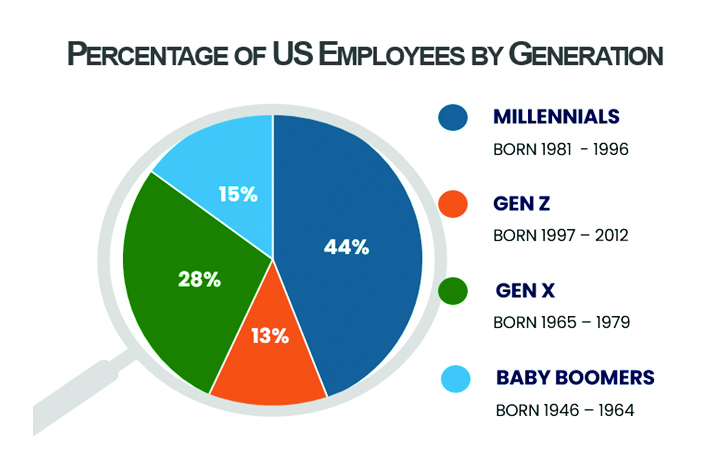
As today’s workforce continues to evolve, employers now manage four generations of employees who have differing—and sometimes conflicting—needs. This dynamic prompted ARAG Legal Insurance to learn more about how employees’ generation impacts their views of their benefits, communication preferences and top concerns.

The ARAG Multigenerational Workforce Study 2024 surveyed 2400 full-time employees from across the U.S. and analyzed responses from each of the four generations.

Millennials are by far the largest working generation. But as Boomers continue to retire (albeit more slowly than many expected), Zoomers are rapidly becoming a more prominent force. In fact, Gen Z employees are expected to outnumber Boomers by the end of 2024 and are forecast to represent a third of the workforce by 2030.

As you help your clients review their benefits offering for the coming years, it’d be helpful to keep these generational nuances in mind to stay relevant and more inclusive.

What’s keeping employees up at night—and how can voluntary benefits help
According to ARAG’s research, financial stability was the most pressing issue for all employees while a closely aligned worry about future uncertainties was a top three concern across all generations.

Overall, the primary worries causing respondents to lose sleep are:

  • Financial stability (63 percent)
  • Future uncertainties (45 percent)
  • Work-life balance (39 percent)
  • Experiencing high levels of stress or anxiety (37 percent)
  • Their own health issues (35 percent)

Some distinct generational differences to note include:

  • Younger workers (Gen Z and Millennials) expressed greater concern about their financial stability than their more senior colleagues.
  • In addition to finances, Millennials are the most concerned about job security and navigating complex family matters.
  • Members of Gen Z are most worried about work-life balance and most likely to experience high levels of stress and anxiety.
  • For Gen X and Boomers, health concerns can loom large—their own health and the health of family members.

What does this mean for your clients? Employers should consider investing in or expanding programs that can help alleviate some of this stress, such as financial counseling, retirement planning, student loan repayment plans, LTC solutions or legal insurance. These types of voluntary benefits can help employees prepare for the future and mitigate risk as unforeseen issues arise.

What each generation thinks of their employers’ benefit offering
The good news is: Overall, 76 percent of employees feel some level of financial, emotional or mental support from their employers. Further, the 2024 ARAG study reports that 69 percent of employees are “somewhat to very satisfied” with the benefits program offered by their current employer.

When looking at this stat by generation, we find that older generations are the most pleased with the benefits options; with nearly three-quarters of Gen Xers expressing satisfaction, followed by Boomers (70 percent), Millennials (68 percent) and Gen Z (66 percent).

But what about the more than 30 percent of employees that don’t feel this way? Nearly two-thirds of those employees were dissatisfied because benefit costs were too high and 42 percent thought the options were too limited. Gen X (76 percent) and Millennials (63 percent) were most likely to cite high cost—which makes sense when you consider that these two generations are more likely to have dependents or a family plan for most of their benefits.

How well do employees really understand their benefits
The ARAG 2024 study found that nearly 40 percent of employees are “not at all or only slightly familiar” with non-medical voluntary benefits, such as life insurance, financial wellness and planning programs, LTC, pet insurance and legal plans. But understanding these benefit options can be key to addressing employees’ biggest concerns.

Contributing factors for this disconnect were lack of communication; benefit program complexity (being too hard to understand); and not having enough time to learn about these benefits. On average, employees spend just 23 minutes reviewing information on these voluntary benefit options. Gen Z, the newest entrants to the workforce, spends slightly less time than Boomers, who consider themselves very familiar with their options.

Perhaps it’s no surprise then that nearly two-thirds (64 percent) of Zoomers report seeking advice or opinions from colleagues, friends or family members to support their benefit decision-making.

This speaks to the need to ensure your benefits content is easily accessible, on-demand and easy to understand and share, particularly for employees new to the world of benefits.

Workplace communication preferences are shifting
When your clients are working on creating messaging around their benefits, particularly during open enrollment, keep in mind that most employees (60 percent) need a “moderate” amount of information to decide if they will enroll in a non-medical voluntary benefit.

As employers think through how best to hit that “just right” level of benefits information, their communication plans should also factor in each generation’s preferred methods to receive that information—both where they align and where they differ.

All generations across the workforce have an affinity for receiving open enrollment communications via email.

Older generations still prefer more traditional printed booklets and benefits guides, while younger colleagues heavily favor digital communications, such as digital booklets, videos, texts, and online articles.

And to further illustrate how large the digital divide can be, consider this. For those who had never used AI-based tools to help make benefit selections—given the opportunity, more than half of Gen Z employees would be open to using it while 73 percent of Boomers said they were unwilling to even try.

Looking forward
The bottom line for you and your clients is that employees want to feel supported by their employers in their personal and professional lives—and one impactful way employers can do that is through the benefits that they offer. As more members of Gen Z enter the workforce and more Boomers exit, employers will need to adapt their benefits and communications strategies that support them to resonate with younger generations’ preferences and needs. It’s also a great opportunity for you to help clients communicate more effectively about the value their benefits deliver to employees, regardless of their age or life stage.

10 Questions To Ask Clients About Long Term Care Planning

Long-term care funding tends to be the afterthought of financial planning. People don’t want to talk about it and advisors don’t want to bring it up. As a result, families are clueless about how to pay for care when that time comes. We have a tsunami of Americans who will need care over the next several decades and those of us with personal experience, myself included, know all too well what that care looks like when a family member has failed to plan for it. We can do better.

November is Long-Term Care Awareness Month and a great opportunity to spread the word about LTC planning and funding solutions. It’s also a good time for advisors to learn how to have the conversations that can lead more Americans to consider their own plan. But it’s not just conversations with individual clients. The conversation can and should extend to employers. The group market is growing because employers are looking for benefits that can help them retain valuable employees.

When you start a conversation about long-term care, it’s helpful to ask the right questions to get a better understanding of the client’s needs, financial situation, and what they want their experience to be. Don’t be surprised if there is a huge gap between expectations and reality. Your job is to get your clients to think critically about how they can save themselves and their families from an economic disaster.

Below are important questions to ask clients to help guide the LTC planning conversation. Each question serves as a foundation for building a comprehensive and personalized long-term care strategy.

10 Long-Term Care Questions

  1. What are your expectations and goals for long-term care?
    Understanding a client’s expectations and goals for long-term care is crucial as it helps tailor a care plan that aligns with their personal values and desired quality of life. You want to ensure that the care strategies proposed are in sync with the client’s vision and resources.

2. Have you considered the potential length of time you might need care?
Considering the potential duration of care is important because it affects the financial planning and emotional preparedness of the client and their family. Having a plan to pay for one year of care is a much different prospect than a five- or six-year plan.

3. How do you plan to allocate your financial resources for long-term care?
As an advisor, you need to understand the client’s thought process to develop a realistic and sustainable long-term care plan, considering the client’s assets, income, family resources, and potential benefits.

4. How does the possibility of long-term care impact your overall retirement planning?
The possibility of long-term care can significantly impact retirement planning as it may require reallocating resources and adjusting retirement goals to accommodate the potential costs and care needs.

5. Are you aware of the current costs associated with different types of long-term care in your area?
Being aware of the current costs of care is essential for accurate planning. Advisors should be knowledgeable about these costs to help clients understand the financial implications and explore various care options within their budget.

6. Have you thought about the inflation rate and how it might affect future long-term care costs?
Understanding inflation’s impact on long-term care costs is crucial because it affects the purchasing power of your clients’ savings and the cost of future care. As costs rise, the amount of care they can afford may decrease unless their plan accounts for inflation.

7. How is your health and what is your family health history, and how might that influence your long-term care planning?
Uncovering health issues and family health history is important as it can indicate potential future health issues, allowing for a more tailored and proactive long-term care plan. It will help you target a product that is more suitable for the client.

8. Do you have any existing insurance policies that could contribute to your long-term care funding?
Existing insurance policies should be reviewed to ensure they align with the client’s long-term care needs and goals, as they may provide a foundation for funding.

9. What are your thoughts on long-term care insurance as a way to manage potential costs?
Evaluating long-term care insurance is essential for managing potential costs, as it can offer financial protection and peace of mind against the high expenses of extended care. Getting younger clients into a “starter” plan, one that has a minimal amount of coverage can give them a start and then they can stack another plan on top of that when they can afford to pay for additional coverage.

10. How would you like to balance the potential need for long-term care with other financial goals and legacies you wish to leave?
Balancing long-term care with other financial objectives requires a strategic approach to ensure that a client can meet their care needs without compromising other life goals or legacies they intend to leave behind. Sometimes that can be achieved, but often people realize that they will have to shift their perspective on what is truly possible.

How to Approach Employers
There are well over 50 million family caregivers in the United States, and many of them are employed. We have an opportunity to engage the business community in the long-term care funding conversation and we should be enabling them to offer solutions to employees.

When speaking with a business leader, consider asking them if they believe that they have been impacted by employees who care for family members. It’s likely that they have, which means there has been an impact on productivity as a result. Suggest that they survey their employees by using some of the questions above to find out what they understand about long-term care planning.

There are numerous products and strategies for group LTC, including affordable employer-funding options. It’s important to partner with an agency like BuddyIns to help you determine the best product and enrollment process for a specific situation as group enrollments can have complex challenges.

Let’s Work Together to Help More Families
To create a better care experience for Americans will require advisors to expand their own understanding of new funding solutions. Asking the tough questions that are designed to initiate a comprehensive discussion about long-term care funding will ensure that you have a full view of your client’s planning mindset. Remember that this can be a sensitive topic so it’s important to tailor the questions and fact-finding process to each client’s unique circumstances. Explore all available options to create a robust and flexible long-term care funding strategy.

The Council For Disability Income Awareness—A New Name. An Expanding Mission.

After nearly two decades, the Council for Disability Awareness changed its name on May 15, 2024. The word “Income” was added to the name to communicate the CDIA’s expanding services and growing membership.

Over the past eight months I have been excited to participate in this change by serving, first as Interim President, and now as President of the CDIA. Our prior President, Carol Harnett, passed in August, 2023, after a relapse of cancer. Carol was well-known and her loss was widely felt by the CDA and throughout the industry. When I was asked to begin serving in her place, you might imagine, for an ‘old warhorse’ disability guy, how honored I felt.

Fast forward to now and we are making significant progress in redefining our mission, audience, website, media platforms, and membership. With the introduction of our new name, I want to share a quick review of what the CDIA is involved in and our plans for the near future.

“Blue Sky” Revelations
Our new direction came about through what I called an open-ended, “Blue Sky” exploration of our research and marketing activities. We found many of our services and member activities are valued and depended upon. However, we recognized that our websites, in particular, were dated and that some tools didn’t function. We had three separate sites to serve consumers, agents/brokers/consultants, and our member companies. One of my first decisions was to develop a single website to serve all of our audiences seamlessly and responsively. Work on this project has begun and you will see the results later this year.

Clarifying Our Name
Another issue for us was how the general public perceived the CDA name. Many outside the insurance and disability industry thought our mission was based on the “disabled” American worker. In fact, for two decades our real focus has been to educate working Americans about the risks of disability and the catastrophic financial impact on his or her family. The confusion about our name was understandable.

We also recognize that the disability income resources for working Americans are changing rapidly. New legislation, regulations, and the economy have created evolving options and challenges for employees, companies, and insurance providers. In this new landscape, the Council for Disability Income Awareness clarifies our work while retaining our well-known name recognition from the past two decades.

For Agents, Brokers, and Consultants
After consumers, our largest audiences are insurance and financial professionals throughout North America. To support their day-to-day marketing and sales efforts we provide outstanding educational tools and statistics at no cost. Thousands of brokers rely on these materials which we update annually and make available 24/7.

CDIA Member Firms
Member firms represent our key audience and are our most engaged participants. We continuously monitor new research and regulatory agency activities to help our members respond to changing regulation requirements and marketplace needs. Our CDIA staff researcher is a well-known expert in the field. His expertise allows us to do deep dives into emerging data and trends.

Expanding the CDIA Member Audience
Historically our membership was exclusively made up of insurance carriers, both Group and Individual. Today, in addition to our insurance company members, we also recognize the growth and importance of related firms that provide industry products and services, such as:

  • Claims adjudication
  • Rehabilitations services and advice
  • Reinsurance
  • Specialized disability products
  • Research firms
  • Underwriting resources
  • Providers of regulatory guidance and updates

The “Broker’s Broker”
Our invitation to join the CDIA also now includes the “broker’s, broker” segment of our industry’s distribution model. Looking back 40 years, over 300 disability carriers were marketing products. Often, these firms were small mutual companies that provided products to their agencies and agents. However, the catastrophic losses in the 90s caused most of those carriers to disappear. Also lost was in-house training on disability insurance that the carriers provided. While IDI carriers provide agent training, much of that role has been assumed by the “broker’s broker”…disability IMOs. The majority of IDI is written through these agencies and they provide training and sales support throughout the process. We are approaching more of these agencies to join and bring their insights to the CDIA.

The Big Ask
I have a big ask: Are the insurance carriers you work with members of the Council for Disability Income Awareness? I see material developed and published used on their websites and other collateral marketing material by many carriers that are not members of the CDIA. Don’t you think that they should be helping to fund the research and educational programs that the CDIA sponsors? Don’t you think that the CDIA, with its focus on the American worker, the agents that work with those workers, using the materials developed and published by the CDIA, should have your insurance carrier as a proud member? If you do think so, let them know!

Current Membership of the CDIA
Carrier Members:

  • Guardian
  • American Fidelity
  • Ameritas
  • Illinois Mutual
  • Lincoln Financial
  • MassMutual
  • MetLife
  • United Healthcare

Associate Members:

  • Allsup
  • MGIS
  • MD Guidelines
  • SmithGroup
  • The Claim Lab

I hope you will look at the outstanding insurance companies that have supported the CDIA, often for many years, and consider them for your client’s needs.

I hope this article provides you a better understanding of the CDIA, our role, and purpose, and that you also know that we are actively listening to you to better understand your needs as you carry forward the message of disability awareness to your clients, both individuals and companies. Please feel free to reach out to me at bherum@disabilityhappens.com.